
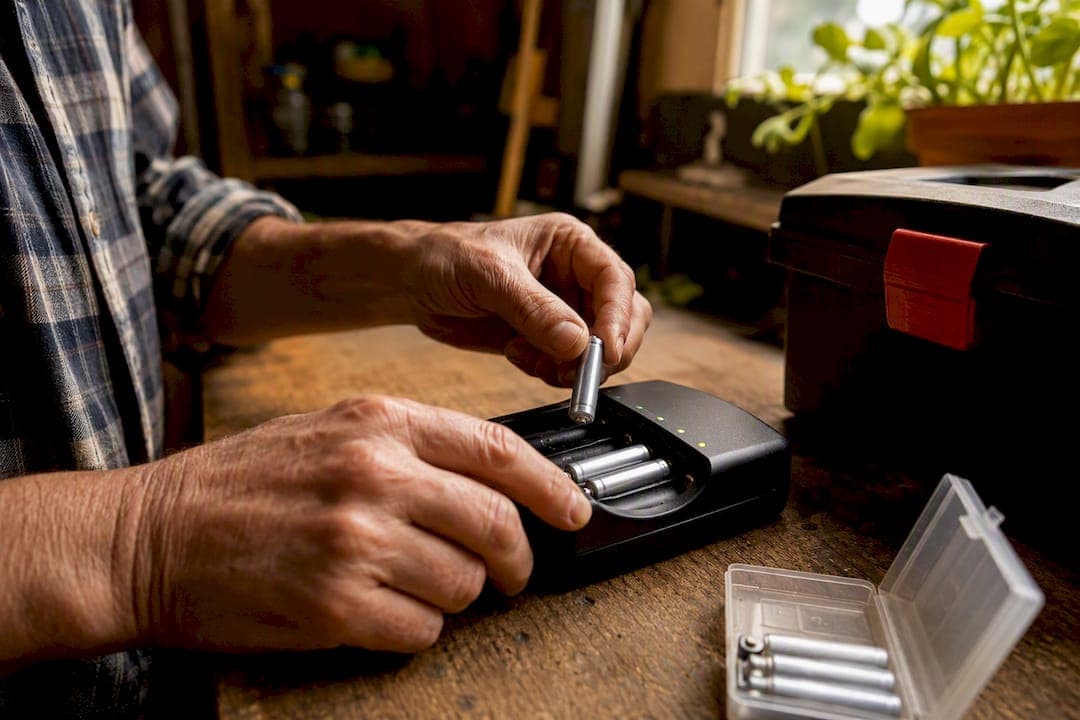
Use rechargeable AAA batteries for anything you reach for often, from TV remotes to wireless mice, and buy low self discharge (LSD) NiMH cells first. They arrive precharged, hold their charge for months on the shelf, and drop straight into most devices without a voltage problem. Pair them with an intelligent charger that watches each cell separately and cuts off automatically, since a basic timed charger will cook cells over time.
- Buy LSD NiMH AAA cells rated 800 to 900 mAh for most household gear
- Get a charger with individual channel monitoring, not a flat timer
- Keep two sets in rotation so one is always ready to swap in
Grid electricity costs a fraction of what you'd spend feeding a device single use alkalines one pack at a time, and the Umweltbundesamt points to this gap as the core reason it recommends rechargeables for frequent use. Buy once, recharge for years, and keep the packaging out of the trash.
Key Takeaways
Low self discharge NiMH AAA cells paired with an intelligent, per-cell monitoring charger deliver the best combination of runtime, lifespan, and cost savings for household use.
| Point | Details |
|---|---|
| Default to LSD NiMH | Precharged, ready to use cells hold their charge for months and fit most devices without issue. |
| Match capacity to the device | Save higher mAh cells (900+) for motors and screens; lower capacity works fine for remotes. |
| Charger quality drives lifespan | A per-cell monitoring charger with auto cutoff prevents the overcharging that kills cheap batteries early. |
| Dispose through collection points | Never bin batteries with household trash; use retailer or municipal recycling per Umweltbundesamt guidance. |
| Akkuplus stocks both ends | Akkuplus sells AAA NiMH cells from 400mAh to 1500mAh and intelligent chargers to match. |
Table of Contents
- Rechargeable AAA Batteries Explained: NiMH, LSD, and How They Differ From Alkaline
- AAA NiMH Capacity: Matching mAh to What You Actually Own
- How Long Rechargeable AAA Batteries Last and When to Replace Them
- Charger Guidance: Why the Charger Matters as Much as the Battery
- Rechargeable vs. Disposable AAA Batteries: Doing the Math
- Storing, Caring For, and Recycling AAA Batteries the Right Way
- What Akkuplus Stocks for Rechargeable AAA Setups
- Why the "Just Buy Whatever's Cheapest" Advice Gets This Wrong
- Get Set Up With Akkuplus
- Frequently Asked Questions
- Sources
Rechargeable AAA Batteries Explained: NiMH, LSD, and How They Differ From Alkaline
Rechargeable AAA batteries almost always use nickel metal hydride (NiMH) chemistry today. Standard NiMH cells hold a solid charge but drain slowly on the shelf, sometimes losing a meaningful chunk of capacity within a month of storage. Low self discharge NiMH fixes exactly that problem. LSD cells, sold under labels like "ready to use" or "precharged," keep most of their charge for up to a year sitting in a drawer, which is why they've become the practical default for everyday devices.
There's a voltage detail worth knowing before you buy: NiMH rechargeables run at 1.2 volts nominal, while disposable alkaline and primary lithium AAAs run at 1.5 volts. Most electronics tolerate this difference without issue, but a handful of voltage sensitive devices, like some precision thermometers or older flash units, may read low or behave oddly. The technical comparison at Akkuvergleichstest lays out the tradeoffs between NiMH, lithium primary, and alkaline cells in more detail.
- NiMH: rechargeable, 1.2V, the standard choice for household electronics
- LSD NiMH: same chemistry, engineered to resist shelf drain, sold precharged
- Alkaline/primary lithium: single use, 1.5V, best for rare use or extreme conditions
AAA NiMH Capacity: Matching mAh to What You Actually Own
The mAh rating on a AAA cell tells you how much charge it stores, and roughly how long it will run a given device before needing a recharge. A 750 mAh cell and a 1,000 mAh cell will both work fine in a TV remote, since a remote sips power in tiny bursts. High drain gadgets are a different story.
Wireless mice, game controllers, and toys with motors pull current fast, so a higher capacity cell (900 mAh and up) noticeably outlasts a low capacity one in daily use. Flashlights fall somewhere in between depending on the LED. For a remote or a wall clock, a modest 550 to 700 mAh LSD cell is plenty and often cheaper per unit. For anything with a motor or a screen, spend the extra dollar or two for a cell in the 900 to 1,000+ mAh range.
- Remotes and clocks: 550 to 800 mAh is enough
- Wireless mice, keyboards, and toys: 900 mAh or higher performs better
- Flashlights and game controllers: prioritize higher capacity for consistent brightness or response
A Panasonic HHR-150AAF at 1,500 mAh sits near the top of what's available in the AAA size, useful when you want maximum runtime between charges rather than shelf life.
How Long Rechargeable AAA Batteries Last and When to Replace Them
A decent NiMH AAA cell typically handles several hundred charge cycles before its usable capacity drops enough to matter, and LSD variants tend to hold up just as well as standard NiMH over that span. Heat is the main enemy. Leaving cells in a charger that runs hot, or storing them in a car glovebox during summer, accelerates the internal wear that shortens cycle life. Overcharging on a cheap timer-only charger does the same damage from the other direction.
You'll notice a cell is on its way out when a device that used to run for a week starts needing a recharge every day or two, or when a battery feels warmer than usual right after a full charge. A cheap battery tester takes the guesswork out of this, since it shows you actual remaining capacity instead of a rough guess based on how a device is behaving.
- Watch for shortened runtime between charges as the main warning sign
- Retire cells that feel hot after a normal charge cycle
- Keep spares in a cool, dry spot rather than a hot car or direct sun
Pro Tip: Check capacity every six months or so with a battery tester built for standard cells rather than waiting for a device to start acting up.
Charger Guidance: Why the Charger Matters as Much as the Battery
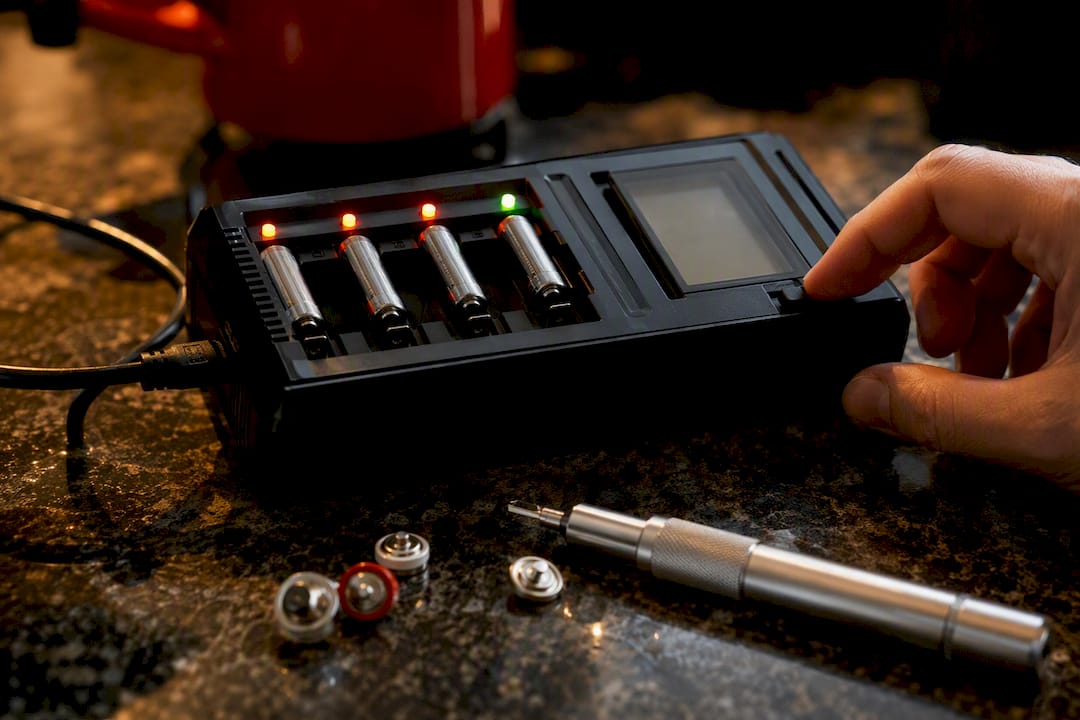
Buying good LSD NiMH cells and then charging them on a bargain bin timer charger wastes half the investment. Verbraucherzentrale Baden-Württemberg recommends intelligent chargers that monitor each cell on its own circuit and shut off automatically once that cell is full, since basic timers charge every slot for the same fixed duration regardless of what each cell actually needs.
- Look for delta-V cutoff detection, which senses the voltage drop that signals a full cell
- Choose a charger with independent per-slot current control, not one that ganges cells together
- Check for a refresh or conditioning mode if you plan to revive older, underused cells
Match cells by brand, age, and capacity when loading a multi-cell device, since mismatched cells drain unevenly and stress the weaker one. Avoid charging cells that feel unusually warm from use, and don't leave cells sitting on a basic charger for days unless the manual specifically confirms it supports long term trickle charging.
Pro Tip: An intelligent microcontroller charger with individual channel monitoring is the single upgrade that does the most to extend how long your cells last.
Rechargeable vs. Disposable AAA Batteries: Doing the Math
The upfront cost of LSD NiMH cells plus a decent charger looks steeper than a pack of alkalines at the checkout, but the math flips fast for anyone using batteries regularly. Consumer testing on rechargeable AAA adoption suggests the break-even point often lands within a handful of recharge cycles for households that go through batteries often, after which every additional charge is essentially free compared to buying new disposables.
Part of that gap comes down to energy cost. The Umweltbundesamt's cost comparisons show that electricity from the wall socket costs a small fraction of what the equivalent energy from disposable batteries costs, which is the whole economic case for switching.
- Rechargeables win for remotes, toys, mice, and anything used daily
- Disposables still make sense for smoke detectors, emergency kits, or devices left unused for years
- Extreme cold favors primary lithium, since NiMH capacity drops more sharply in low temperatures
Storing, Caring For, and Recycling AAA Batteries the Right Way
Store spare cells somewhere cool and dry, away from direct sunlight and away from metal objects that could short the terminals in a drawer. If cells will sit unused for months, a partial charge, rather than fully charged or fully drained, keeps the internal chemistry happiest. Tape over the terminals before tossing loose cells in a bag for transport or recycling, since a bare AAA touching keys or coins is a real short circuit risk.
Never put batteries, rechargeable or otherwise, in the household trash. The Umweltbundesamt is explicit that batteries and accumulators must go through proper collection channels, whether that's a retailer drop off box or a municipal recycling point.
- Store cells cool, dry, and at partial charge for long term storage
- Tape terminals before transport or disposal
- Drop dead cells at a collection point, never in general trash
What Akkuplus Stocks for Rechargeable AAA Setups
Akkuplus carries NiMH AAA cells across the capacity range households actually need, from a modest GP 400mAh cell suited to light drain devices up to the higher capacity Panasonic 1500mAh option for gear that draws more current. Chargers with individual channel monitoring, like the Ansmann model in our lineup, sit alongside the cells so you're not stuck matching a battery to a charger from a different store.
Use the capacity and chemistry filters on akkuplus.de to narrow down options by mAh, precharged/LSD status, or charger compatibility.
- Pick a smart charger first, then match cells to it
- Buy two sets of cells so one is always charged and ready
- Filter by capacity if you're outfitting high drain devices like controllers or mice
Why the "Just Buy Whatever's Cheapest" Advice Gets This Wrong
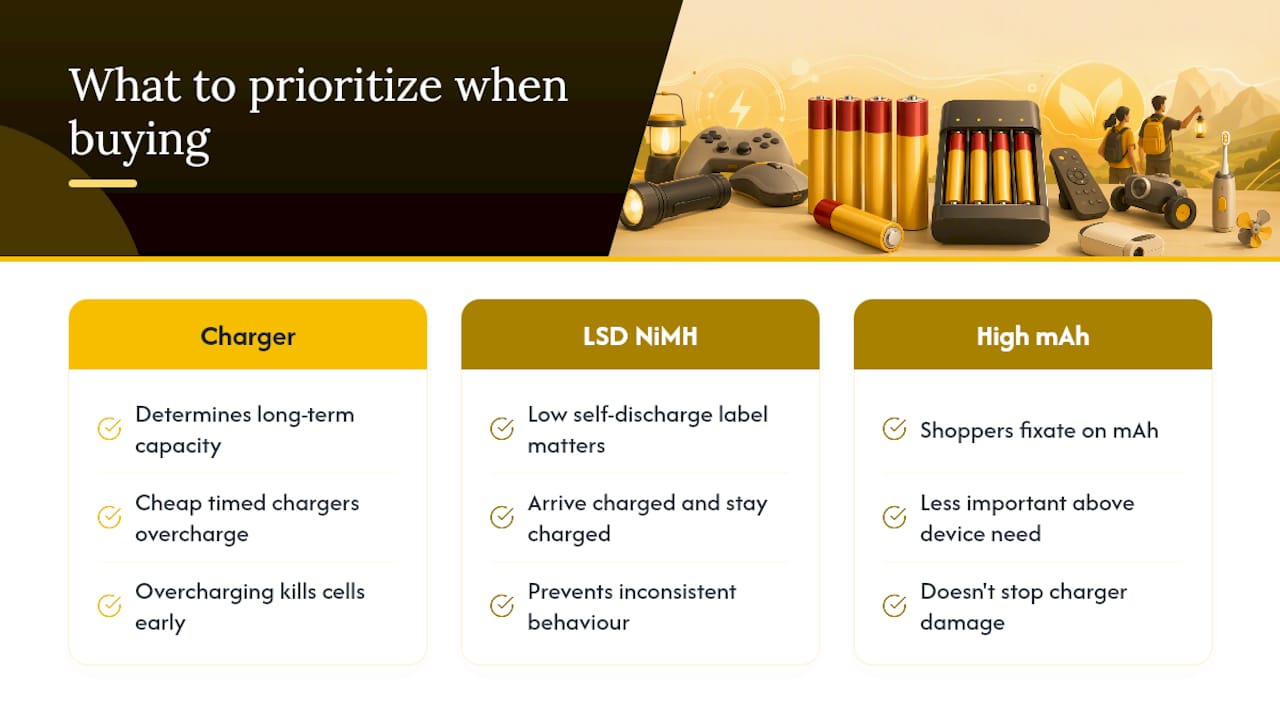
Most buying advice on rechargeable batteries treats the cell as the whole story and treats the charger as an afterthought. That's backwards. The research on charger quality is unambiguous: a cheap timed charger overcharges cells as a matter of routine, and that overcharging is what actually kills capacity early, not normal use. Readers fixate on mAh numbers on the package and skip past the one purchase that determines whether those numbers stay true a year later.
The other place conventional advice falls short is treating "rechargeable" as a single category. LSD NiMH and standard NiMH aren't the same purchase decision. Someone who grabs a random NiMH four-pack without checking for the low self discharge label may end up with cells that arrive half drained and behave inconsistently, then concludes rechargeables "don't really work," when the actual problem was the label they didn't read.
If you take one thing from this, prioritize the charger and the LSD label over chasing the highest mAh number on the shelf. Capacity matters less than most shoppers assume once you're above the threshold your device actually needs.
Get Set Up With Akkuplus
Akkuplus is built for exactly this kind of setup: households that want to stop restocking single use batteries and start running a small rotation of rechargeable cells that actually lasts. Unlike a general electronics aisle where LSD NiMH cells sit unlabeled next to standard NiMH and nobody explains the difference, akkuplus.de filters by capacity, precharge status, and charger compatibility so you buy the right combination the first time.
If your remotes, mice, or kids' toys are eating through disposable batteries every month, start with a battery tester to see what you're actually working with, then move to a proper charger and a matched set of cells. Check current stock and pricing on AAA NiMH cells and chargers at akkuplus.de, or pick up a battery tester first if you want to diagnose your current batteries before replacing anything.
Frequently Asked Questions
Are rechargeable AAA batteries actually better than alkaline for most devices? For anything used often, yes. LSD NiMH rechargeables cost more upfront but pay that back within a handful of cycles for regular users, according to consumer testing on adoption patterns. For rarely used devices like smoke detectors, disposable alkaline or primary lithium can still make more sense.
How do I charge AAA batteries safely? Use a charger with individual cell monitoring and automatic cutoff rather than a fixed timer, keep the charger somewhere cool during use, and don't mix cells of different ages or capacities in the same charging batch.
What's a good AAA NiMH capacity for household electronics? Around 550 to 800 mAh covers light drain devices like remotes and clocks. Go with 900 mAh or higher for wireless mice, game controllers, and anything with a motor.
How long do rechargeable AAA batteries last before they need replacing? Most NiMH and LSD NiMH AAA cells handle several hundred charge cycles under normal household use before capacity drops enough to notice, assuming they're charged on a quality charger and kept away from heat.
Sources
For deeper guidance beyond this article, see the Umweltbundesamt's battery usage and disposal recommendations, Verbraucherzentrale Baden-Württemberg's charger and handling advice, and the consumer test coverage on rechargeable AAA adoption. Browse current AAA options at Akkuplus.
- Batterien und Akkus richtig nutzen und fachgerecht entsorgen | Umweltbundesamt
- Batterien und Akkus richtig verwenden und entsorgen | Verbraucherzentrale Baden-Württemberg
- Für diese Personen lohnen sich wiederaufladbare AAA-Batterien (HNA)
- NiMH vs Lithium vs Alkaline comparison (Akkuvergleichstest)