

If you want daily convenience and don't mind a nightly charging habit, choose rechargeable lithium-ion. If you need travel-ready spares or your aid still runs on disposables, buy zinc-air hearing aid batteries in the exact size printed on your device or inside the battery compartment. Check your instruction manual, the tiny imprint under the battery door, or ask your audiologist if you're unsure.
Before you buy:
- Confirm your size (10, 312, 13, or 675) from the manual or compartment imprint.
- Check the expiration date stamped on the packaging.
- Buy a reliable zinc-air multi-pack for spares, or the exact charger your rechargeable model requires.
Key Takeaways
Matching the correct size and chemistry to your hearing aid, and giving zinc-air cells a short activation window, does more for battery performance than any brand choice.
| Point | Details |
|---|---|
| Match your exact size | Confirm size 10, 312, 13, or 675 using the compartment imprint or manual before ordering. |
| Follow the activation window | Waiting up to five minutes after removing the tab can extend usable battery life. |
| Expect variable lifespan | Disposable runtimes range from about 3 days (size 10) to 22 days (size 675) depending on use. |
| Store batteries correctly | Keep packs at room temperature, never refrigerated, and away from metal contact. |
| Buy from spec-detailed sources | Akkuplus lists exact voltage and capacity on every product page to prevent mismatches. |
Table of Contents
- What Are the Main Types of Hearing Aid Batteries?
- What Size Battery Does Your Hearing Aid Use?
- How Long Do Hearing Aid Batteries Actually Last?
- How Do You Activate and Store Batteries Correctly?
- What Should You Check Before You Buy?
- What Actually Matters When You Buy Hearing Aid Batteries
- Where to Buy the Right Battery With Confidence
- Sources
What Are the Main Types of Hearing Aid Batteries?
Two technologies dominate the market: disposable zinc-air cells and rechargeable lithium-ion batteries built into the hearing aid. Disposables still make up roughly half the hearing aid battery market, according to industry market data, so you're not behind the times if you're still peeling tabs.
Zinc-air disposables activate the moment air reaches the cell through the tiny holes under the sticker tab. They're cheap, sold everywhere from pharmacies to grocery stores, and easy to stash a spare pack in a coat pocket or glove box. The tradeoff is that you'll be changing them every few days to two weeks, depending on size and use.
Lithium-ion rechargeables sit inside the aid and get topped off overnight in a charging case, much like a phone. Most deliver 18 to 24 hours of runtime per charge, and the internal cell usually lasts several years before it needs professional replacement.
If you have limited hand dexterity, rechargeables remove the fiddly job of handling small button cells. If you travel often or want a backup that never needs an outlet, disposables are the safer bet.
Pro Tip: Keep one zinc-air spare pack in your bag even if you use rechargeables. A dead charger on a trip is a real problem, and a disposable backup can save your day.
What Size Battery Does Your Hearing Aid Use?
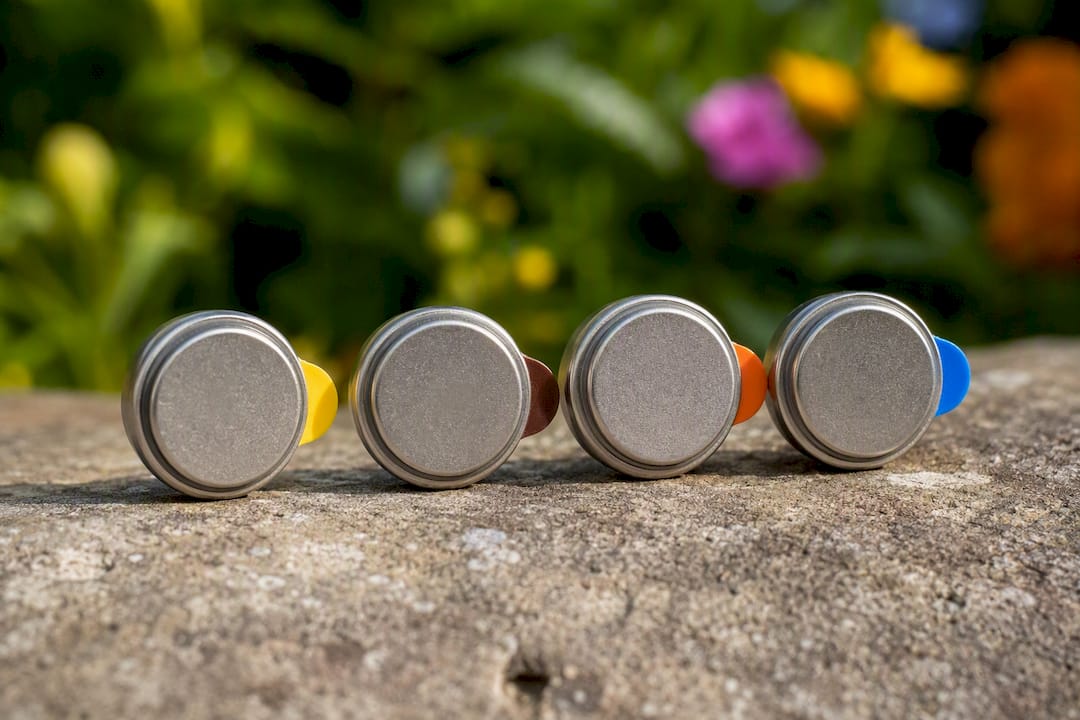
Hearing aid batteries follow a universal color-coding system, so once you know your size, you'll never have to guess at the pharmacy counter again. The four standard sizes are labeled by number and color, a standard industry sources point to as a safety and usability measure that keeps people from buying the wrong cell.
| Size | Color Code | Common Device Type |
|---|---|---|
| 10 | Yellow | Small in-the-ear and mini behind-the-ear aids |
| 312 | Brown | Standard behind-the-ear and receiver-in-canal aids |
| 13 | Orange | Larger behind-the-ear aids |
| 675 | Blue | High-power aids for severe hearing loss |
To confirm your size, open the battery door and look for the printed size number, check your hearing aid's manual, or ask your audiologist during your next fitting appointment. If you're buying online, match the color and number on your old battery to the listing before ordering.
Buy spares in multi-packs so you're never caught with a dead battery mid-day, and check the expiration date on the package. Zinc-air batteries lose potency over time even unopened, so a pack that's been sitting on a shelf for a year won't perform like a fresh one.
How Long Do Hearing Aid Batteries Actually Last?
Runtime varies a lot by size and how hard your aid works. Disposable batteries generally last within these ranges, according to expert testing:
- Size 10: about 3 to 7 days
- Size 312: about 3 to 10 days
- Size 13: about 6 to 14 days
- Size 675: about 9 to 22 days
By the numbers: Rechargeable hearing aids typically deliver 18 to 24 hours of runtime per charge, and the built-in lithium-ion cell generally holds up for several years before it needs professional servicing.
Several things shrink these windows fast. Bluetooth streaming for phone calls or music draws noticeably more power than standard amplification. High-gain settings for severe hearing loss work the battery harder. Wearing your aids more hours per day naturally uses more capacity, and humid or very hot environments can degrade zinc-air cells faster than dry, moderate conditions.
How Do You Activate and Store Batteries Correctly?
Zinc-air batteries need oxygen to activate, which is why they come sealed with a tab. Pull the tab and the battery starts working within a minute, but a small study and manufacturer guidance suggest waiting up to five minutes before inserting it can extend usable battery life, in some cases substantially, according to Hearing Associates. Treat this as a smart habit rather than a guarantee.
- Remove the tab and let the battery sit for about five minutes before inserting it.
- Store unopened batteries at room temperature, roughly 10 to 25°C, in their original packaging.
- Never refrigerate batteries. Condensation can damage the cell, according to hospital guidance on hearing aid battery care.
- Keep batteries away from coins, keys, and other metal objects that can short the terminals.
- Store packs well out of reach of children and pets, since button cells are a swallowing hazard, and recycle used batteries at a pharmacy or battery drop-off point rather than the trash.
Pro Tip: Open one battery at a time instead of peeling all your tabs at once. Once activated, a zinc-air cell keeps draining even while sitting unused in a drawer.
What Should You Check Before You Buy?
Getting the wrong size or an expired pack is the most common mistake people make when restocking. Run through this before checkout:
- Confirm your exact size (10, 312, 13, or 675) against your device's imprint or manual.
- Check the expiration date and look for mercury-free, zinc-air labeling on the packaging.
- Buy multi-packs if you go through disposables quickly, or verify you're ordering the correct official charger for a rechargeable model.
- If you rely on disposables often, a battery tester lets you check remaining charge before you toss a battery that still has life left.
- For rechargeable aids, ask your provider about the battery service window and warranty terms, since the internal cell isn't something you swap yourself.
Subscription delivery is worth considering if you're tired of running out at the worst moment. Setting up recurring shipments of your exact size means you always have a fresh pack in the drawer.
| Buying Priority | Why It Matters |
|---|---|
| Match the exact size | Wrong sizes won't fit the compartment or make poor contact. |
| Check expiration dates | Old zinc-air stock loses capacity even unopened. |
| Verify charger compatibility | Rechargeable models often need brand-specific chargers. |
| Keep a tester on hand | Confirms remaining charge before you discard a usable battery. |
Why Trust This Guidance on Hearing Aid Batteries?
Akkuplus stocks detailed product-spec pages for button cells and rechargeable accessories, including voltage and capacity figures you can cross-check against your device manual, such as the listing for the Varta SR41 silver-oxide cell. That level of specificity matters when a mismatch of even a few millivolts can shorten a battery's working life in sensitive electronics.
- Product pages list exact voltage, capacity, and chemistry for every battery type sold.
- Guidance here reflects manufacturer documentation from sources like Phonak's technical FAQs.
- Every recommendation ties back to a specific size, spec, or documented lifespan range rather than vague advice.
Buying the correct battery isn't about brand loyalty. It's about matching the size, chemistry, and voltage printed on your device to what's in the package, every time.
What Actually Matters When You Buy Hearing Aid Batteries
Most advice on this topic treats every battery decision like it's about brand preference. It isn't. It's about matching a number and a color code correctly, then respecting a few physical facts about how zinc-air chemistry behaves.
The five-minute activation rule gets dismissed by some users as overkill, but the underlying physics is sound: zinc-air cells need oxygen exposure to reach full voltage, and rushing that step on a Monday morning is a common reason batteries "die early" when they haven't actually failed. I'd also push back on the idea that rechargeable is automatically the better upgrade for everyone. It's excellent for daily convenience and dexterity issues, but if you travel to places without reliable power, or you're not ready to commit to a multi-year hardware decision, disposables remain a completely reasonable, lower-commitment choice.
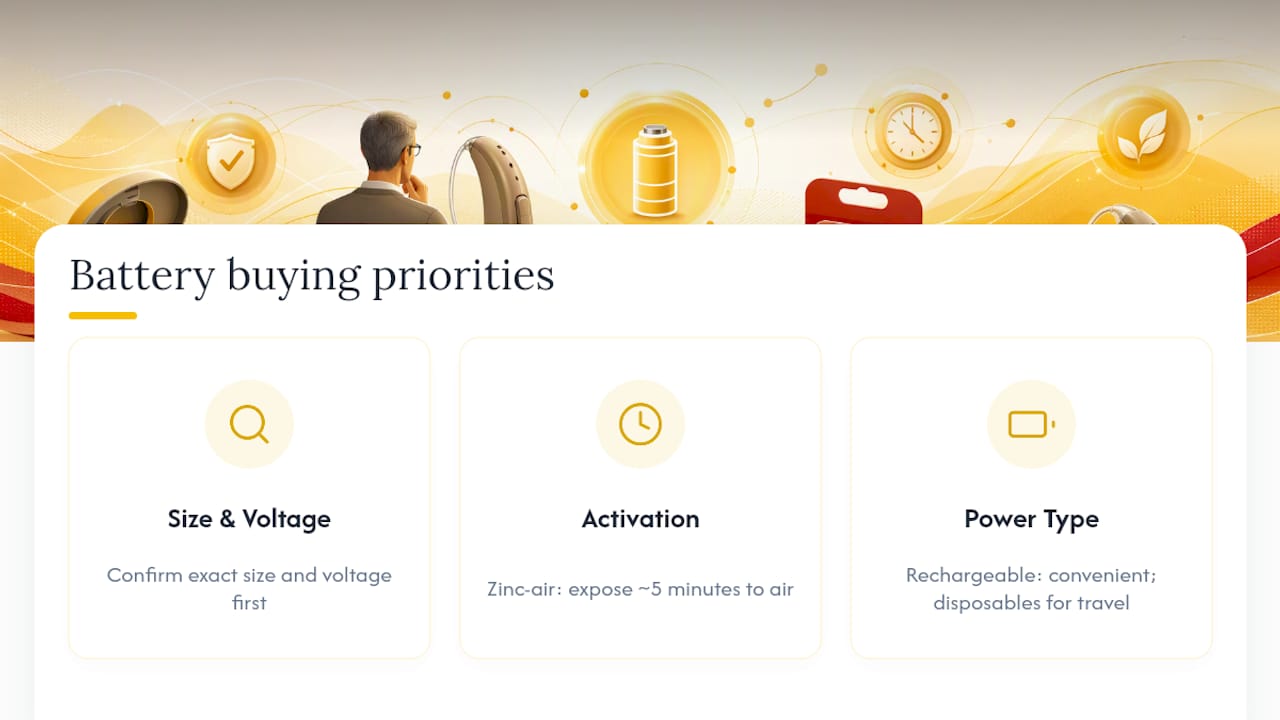
What the reader should prioritize first isn't chemistry at all. It's confirming the exact size and voltage before ordering anything. Every other decision, disposable or rechargeable, only works if that first step is right.
Where to Buy the Right Battery With Confidence
Pharmacy shelves and big-box stores stock generic multi-packs, but they rarely tell you the exact voltage, capacity, or chemistry printed on the cell you're replacing. That's the gap Akkuplus fills for anyone who wants to buy with certainty instead of guessing.
Akkuplus lists full technical specs on every product page, from silver-oxide watch batteries to lithium coin cells like the Panasonic CR1216, so you can match voltage and size before you click buy rather than after your hearing aid rejects the wrong cell. If you go through disposables often, a battery tester from Akkuplus lets you check how much life is left in a cell before you toss it, which saves money over a year of use. Whether you're restocking size 312 zinc-air packs or sourcing a specialized cell for another device in the house, browse the full battery catalog and order the exact size your hearing aid needs today.
Sources
- Listen Hear Diagnostics — Rechargeable vs disposable hearing aid batteries
- Hearing Associates — The 5‑minute rule for hearing aid batteries
- Expert Reviews — How long do hearing aid batteries last?