

Older cars with simple electrics are usually fine for a DIY battery swap; modern cars with start-stop or a battery management system usually aren't, since ADAC recommends professional replacement once anlernen registration is involved. Stranded now? Call a mobile fitter or roadside service. Planning ahead? Pull your owner's manual and confirm the battery spec before you buy anything.
TL;DR:
- Use a professional fitter for modern cars with start-stop systems or battery management systems to ensure proper registration and avoid potential electronic issues.
- Confirm the battery's group size, voltage, capacity, and terminal layout from your owner's manual before purchasing to prevent compatibility problems.
- When replacing a battery yourself, disconnect terminals in the correct order, protect terminals with grease, and consider using a memory saver to prevent loss of personal settings.
- Choose AGM or EFB batteries for start-stop vehicles and ensure the new battery's capacity and CCA meet or exceed the original specifications for reliable performance.
- Never dispose of a car battery in household trash; always recycle at authorized facilities and handle cracked or leaking units with gloves and caution.
Table of Contents
- What to check before you replace a car battery
- How do you safely replace a car battery yourself?
- Why do modern cars need professional battery fitting?
- How do you choose the right replacement battery?
- What does a car battery cost and where should you buy one?
- Sources
What to check before you replace a car battery
Start with your owner's manual. It tells you whether your car has start-stop or a battery management system (BMS), where the battery actually lives, and what group size and terminal layout it needs. Some manufacturers bury the battery under the back seat or in the trunk, which changes the job entirely.
A few quick checks decide whether this is a Saturday-morning task or a job to hand off:
- Location and access: engine bay batteries are usually DIY-friendly; under-seat or trunk-mounted batteries often need trim removal and extra care.
- Weight: batteries run a moderate weight range. Know your limits before you try to lift one out solo.
- Start-stop or BMS present: if yes, lean toward a professional fitter who can handle registration.
- Tools on hand: a 10mm socket wrench, terminal cleaning brush, safety glasses, gloves, and a memory-saver device if you want to keep radio presets and clock settings.
- Fitting options if you'd rather not do it yourself: mobile fitters who come to your driveway, a local garage, or roadside assistance if the car won't start at all.
If more than one of those checks gives you pause, book a fitter rather than improvise.
How do you safely replace a car battery yourself?
Once you've confirmed your car is a reasonable DIY candidate, the actual swap follows a fixed order. Skipping the sequence is how people cause sparks, blow fuses, or damage sensitive electronics.
- Park safely and kill the engine. Set the parking brake and let the engine bay cool if you've just been driving.
- Note that some settings may reset. Radio presets, clock, and sometimes adaptive settings can be lost without a memory-saver plugged into the 12V socket.
- Put on gloves and eye protection. Battery acid is corrosive, and terminals can spark.
- Disconnect the negative terminal first, then the positive. RAC's guide confirms this order reduces the risk of a short circuit while tools are still touching metal.
- Remove the hold-down clamp or bracket.
- Lift the battery straight out, keeping it level so acid doesn't spill from the vents.
- Clean the tray and terminal clamps with a wire brush before the new battery goes in.
- Set the new battery in place, matching orientation to how the old one sat. Secure the hold-down clamp.
- Connect the positive terminal first, then negative, the reverse of removal. RAC notes this reconnect order matters just as much as the disconnect sequence.
- Apply a light coat of dielectric grease or terminal protector to slow corrosion.
- Start the car and confirm dashboard lights clear normally.
Pro Tip: Take a photo of the battery, its terminal covers, and cable routing before you disconnect anything. It's the fastest way to reconnect everything exactly as it was, especially if your car has an unusual bracket or a second smaller cable you didn't expect.
After installation, watch for warning lights that don't clear on their own. That's usually a sign the car needs a diagnostic reset a home tool can't perform, which is where a workshop visit still earns its cost even after a DIY swap.
Why do modern cars need professional battery fitting?
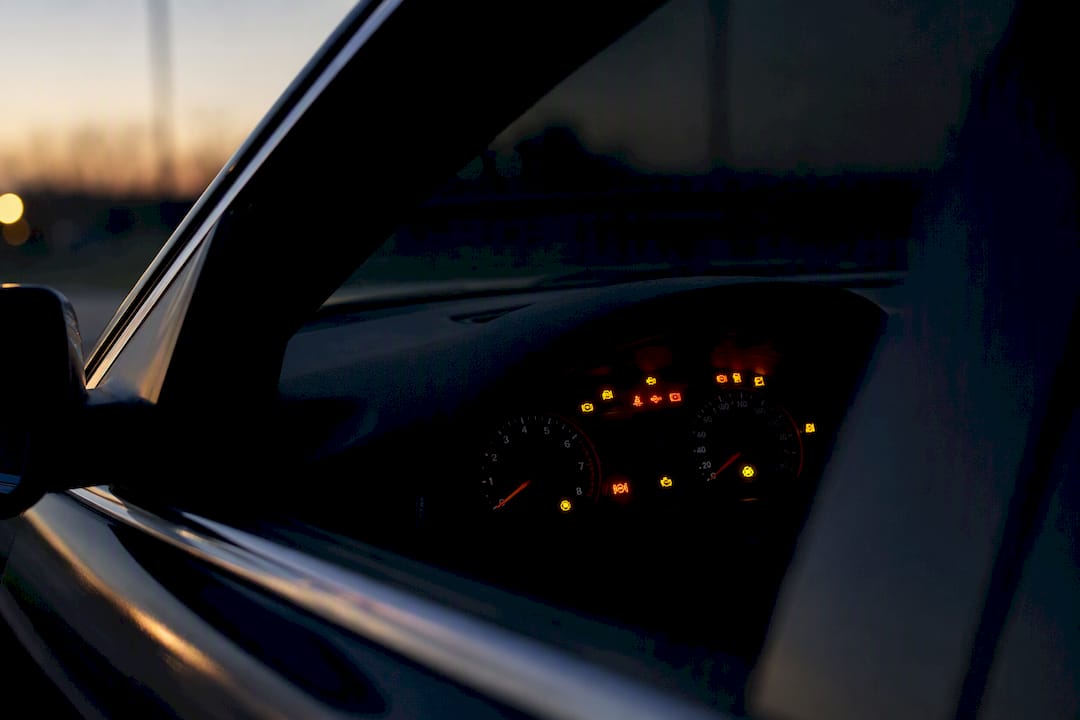
Start-stop systems and battery management systems track the battery's condition constantly, and many need to be told a new battery is installed through an anlernen or registration procedure. Skip that step, and the car's computer keeps making charging decisions based on the old battery's wear data. ADAC's guidance is blunt about it: for many modern vehicles, professional replacement with the right diagnostic tools is the safer route.
Getting this wrong doesn't always fail loudly. It shows up as:
- Warning lights that won't clear without a scan tool reset
- Start-stop that quietly stops working
- Shortened battery life because the BMS never recalibrated to the new unit
A few situations are red flags no matter how confident you feel with a wrench: battery mounted under a seat or in the trunk, cables running near airbag sensors, or a dashboard message demanding reinitialization. Car batteries generally last 3 to 5 years, and on a car with any of those complications, that's a job worth paying someone else to finish correctly the first time.
How do you choose the right replacement battery?
The wrong battery either won't fit, won't perform, or won't communicate properly with a modern car's electronics. VARTA's fitment guidance centers on four numbers: voltage, group size and case dimensions, amp-hour (Ah) capacity, and cold cranking amps (CCA). Match all four, and don't guess on capacity to save a few dollars. A battery with noticeably lower Ah or CCA than the original can leave you stranded on the first cold morning.
Before you buy, run through this:
- Voltage: almost always 12V for passenger cars, but confirm on unusual vehicles.
- Group size and terminal layout: even a close physical match with the wrong terminal position won't let the cables reach.
- Ah and CCA: match the original or go slightly higher, never noticeably lower.
- Battery chemistry: standard flooded batteries suit older cars without start-stop; EFB (Enhanced Flooded Battery) and AGM handle the frequent cycling that start-stop demands; lithium options exist but are less common as direct replacements and often restricted by vehicle compatibility.
- Production date: a battery sitting in a warehouse for over a year loses charge capacity before it's even installed.
- Warranty length: a longer guarantee usually signals better internal build quality.
An AGM starter battery is the right call for most start-stop vehicles, while a straightforward flooded battery still does the job on older, simpler cars.
What does a car battery cost and where should you buy one?
Car battery prices vary mostly by chemistry and capacity. Entry-level flooded batteries sit at the low end, EFB and AGM batteries cost more because they handle deep cycling better, and premium AGM units with higher CCA ratings sit at the top. The biggest cost drivers are Ah capacity, CCA rating, and warranty length; a longer guarantee usually reflects better internal components, not just marketing.
- DIY buy and fit: cheapest route if your car qualifies and you're comfortable with the steps above.
- Buy online, fit yourself: works well when you can verify fitment by registration lookup or exact spec match before ordering.
- Mobile fitting: a technician comes to you, useful for BMS-equipped cars or if lifting the battery isn't practical.
- Garage or workshop fitting: best when registration/anlernen is required or the battery sits in a hard-to-reach spot.
Retailer fitment lookup tools that check compatibility by registration number before you order are worth using regardless of who ends up doing the install.
How do you dispose of an old car battery safely?
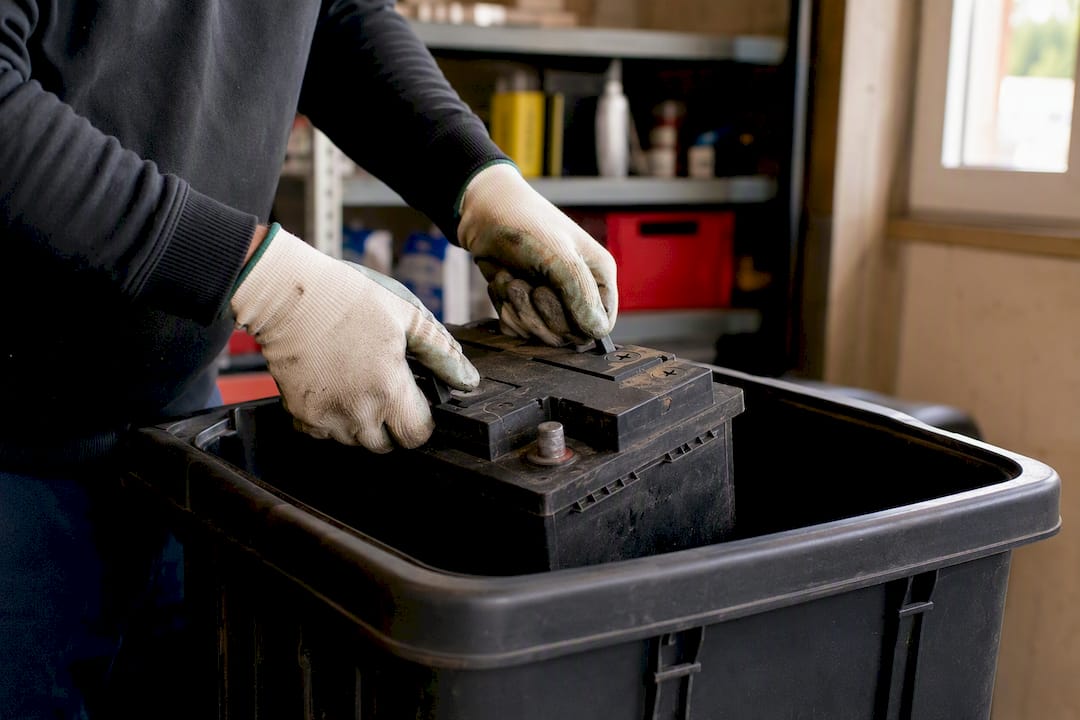
Never bin a battery with household trash. Return it to the retailer, a workshop, or a recycling center. Most of a battery's lead and plastic gets recycled, so nothing about disposal should be casual. Carry it upright in a secure box, and if a case is cracked or leaking, wear gloves and avoid skin contact with the residue entirely.
What AkkuPlus customers should know before they buy
Akkuplus stocks a range of starter batteries and high-capacity Pb units, from 50Ah AGM starter batteries to high-current 9000mAh options, with availability tailored by country across Europe. If you're unsure which spec fits your car, Akkuplus's customer service can help confirm fitment before you order.
Ready to replace your battery? Here's where to start
Akkuplus carries the batteries and testers most drivers need to finish this job right, without guessing at specs from a warehouse shelf. If you're not sure whether your old battery is actually the problem, a battery tester built for standard and button cells settles that before you spend money on a replacement you didn't need.
Once you've confirmed it's time for a new battery, Akkuplus's full catalog covers everything from compact 12Ah units to high-capacity starter batteries for start-stop vehicles. Browse by spec, check the group size and CCA against your manual, and reach out to customer service if you want a second opinion on fitment before you check out.
Sources
- Autobatterie wechseln: Das ist dabei zu beachten! — ADAC
- Battery replacement — VARTA Automotive
- How to change a car battery – all you need to know — RAC
- Markt